
Rising costs, labor shortages, and evolving customer expectations make running a profitable restaurant harder than ever. Restaurant automation can ease some of that pressure and transform your business from surviving to thriving.
Automation is more than the newest technology trend. It’s a game-changer for restaurants looking to improve operational efficiency, speed up service times, or get labor costs under control. Effective automation in the restaurant industry involves using automated systems to handle repetitive, high-volume tasks across restaurant operations. Below are eight areas where implementing automation in restaurants has a strong ROI. Each covers the benefits of automation and what it actually looks like in a restaurant.
Automated Cash Management and Cash Capture Technology
For restaurants, cash management is often one of the most manual, time-consuming processes. Running on paper logs and spreadsheets and reconciling each register by hand takes real time out of a manager’s day. And it only gets harder to manage accurately as you add locations.
Automated cash management can streamline restaurant cash handling and reduce manual reconciliation. Smart safes and cash recyclers automatically count and validate bills. Totals are accurate and available the moment cash goes in, rather than waiting for an end-of-shift count. Because less cash changes hands manually and every deposit is tracked, there’s less risk of theft and shrinkage. This also frees managers from time-consuming bank runs.
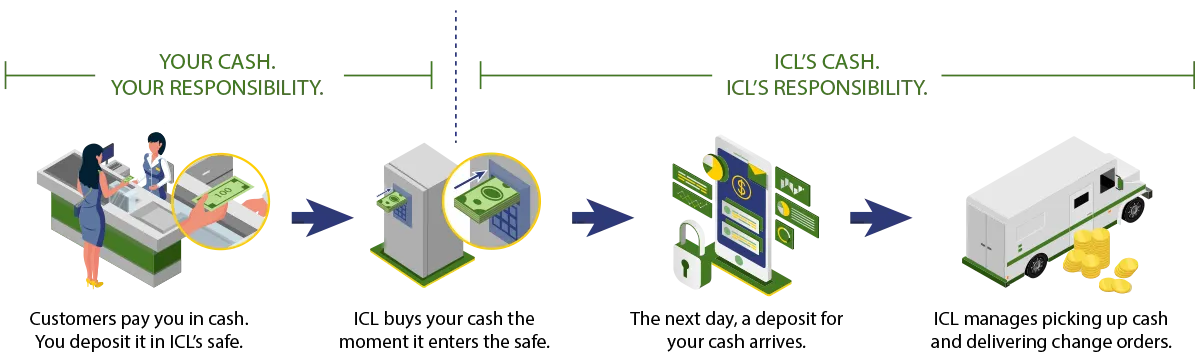
CashSimple®’s cash capture technology takes responsibility for cash once deposited. You have immediate access to deposit data through real-time reporting. Our restaurant cash management system is built specifically for multi-location operators, so every store’s deposits flow into one automated view. Our solution saved over 2 hours of manual cash management per location across a corporate restaurant group’s 1,000+ QSR locations. If you’re still operating with a patchwork of manual counts and bank trips, cash management automation may be the solution you need.
Automated Ordering and Self-Service Kiosks
Self-service kiosks, mobile ordering, and automated point-of-sale technologies allow restaurant customers to place orders with less employee involvement. These tools can improve order accuracy and shorten wait times. Because orders are sent to the kitchen faster, throughput also increases. Automated ordering allows employees to focus on food preparation and customer service.
Self-service kiosks allow for easy order customization. They can also be programmed to automatically suggest add-ons and modifiers, resulting in more upselling. For example, one restaurant had a 25% increase in average ticket size with self-ordering kiosks. They found that 20% of customers opted in to auto-generated upsell offers.
Self-ordering is probably the most common form of restaurant automation. This is beneficial because customers will likely already have encountered these tools at another business and be familiar with how to use them. This improves restaurant efficiency and the overall quality of guests’ dining experiences.
AI-Powered Drive-Thru and Voice Ordering
Restaurants are incorporating AI-powered voice technology into drive-thru and phone ordering. AI agents can answer calls, take orders, and send them into your restaurant systems instantly. They may even be able to answer common guest questions about hours, menus, and policies, take and modify reservations, and respond to event inquiries.
When you’re short-staffed or the restaurant is really busy, you may miss phone calls. This means potential lost revenue or frustrated customers. One San Francisco restaurant that implemented this technology found that the AI agent handled 84% of calls without needing to transfer them to a human. They went from customers complaining, “Why can’t you pick up the phone?” to zero missed calls. Phone bookings went up 42%.
AI-powered drive-thru agents and voice ordering can make the process more consistent and accurate. This makes service faster while reducing pressure on employees during busy periods. However, there are some cons to be aware of. People may mess with this restaurant automation system, especially initially, or be put off by unnatural-sounding AI voices. One person even crashed the system by ordering 18,000 waters at a Taco Bell. Intentional rollout and marketing can help mitigate these potential issues.
Automated Kitchen and Food Preparation Technology
Automated kitchen equipment, robotics, and smart appliances can handle or assist with repetitive food preparation tasks. As these newer technologies continue to improve, their possibilities for implementation will grow exponentially. As of 2026, the most reliable kitchen automation tools for multi-location restaurants tend to share one trait: a narrow, well-defined job.
Here are some examples:
- Since 2020, White Castle has been experimenting with robots to make hamburgers and French fries at select locations. Its goal is to eventually expand this to one-third of locations.
- Table-service robots like Servi have more than 10,000 units deployed worldwide.
- Precision cooking technologies, such as Sous-vide, automatically cook food to the perfect internal temperature, improving consistency and quality.
The focus on simple, well-defined tasks matters when comparing kitchen automation solutions for multi-location restaurants. Deployments that try to automate an entire kitchen line at once tend to underperform. On the other hand, tools that take over a single high-volume station, like frying, grilling, or expo, consistently deliver a return. For most quick-service restaurants, that’s the fry station or dishwashing. For full-service restaurants, it’s often busing or food running. These technologies can help restaurants improve consistency and increase kitchen efficiency. They can also reduce employee workloads and maintain quality during periods of high demand.
Inventory Management and Automated Reordering
Counting inventory by hand is slow and error-prone. Manual counts rarely keep up with how fast ingredients actually move, especially across multiple kitchens. That gap between what’s on the shelf and what the system thinks is on the shelf is where food waste, shortages, and unnecessary spending creep in.
The solution is inventory management automation. Automated inventory management platforms can:
- Track ingredient usage in real-time
- Monitor stock levels and identify waste
- Forecast demand and suggest ordering timelines
- Alert you when there is low stock before you need it
When done well, inventory management automation in restaurants can significantly improve ROI. Automated reordering and predictive tools can help prevent shortages, overordering, and food waste. They can improve food-cost control and reduce the time employees spend manually managing inventory.
Automation platforms use actual usage and sales data to tell you what to order and when, so no more guessing or estimating. For multi-location operators, that translates directly to better margins. Fewer emergency supply runs mean managers spend more time on the floor and less time reacting to inventory surprises.
Employee Scheduling and Labor Management Automation
Building a restaurant schedule by hand is a balancing act. Managers have to weigh sales forecasts, employee availability, labor budgets, and last-minute call-outs. This is often done on a spreadsheet or whiteboard. Then, the process repeats every week across every location. It’s easy to end up overstaffed on a slow Tuesday or understaffed on a busy Friday night.
Automated scheduling and labor management platforms can create and adjust restaurant schedules. Instead of building shifts from scratch, managers start from a forecast-driven draft and adjust as needed. This cuts the time spent on scheduling each week and reduces the guesswork around how many people to put on the floor. Restaurants maintain appropriate staffing levels without taking managers away from customers and employees.
With automated time clocks and attendance tracking, you can get exception alerts for things like a missed clock-out or unapproved overtime. This allows you to catch and address issues with employees early, before they hit payroll. You can also set up automatic notifications for schedule changes and shift swap requests. This means better coverage and fewer last-minute changes. Labor automation even makes it easier to compare staffing efficiency across stores, so you can catch outliers before they become a pattern.
Real-Time Reporting and Financial Management Automation
Integrated reporting and financial automation tools give restaurant owners, operators, and finance teams faster visibility. When you automate restaurant reporting, you can quickly see the most up-to-date data. This includes information on sales, labor, cash, deposits, and other important performance metrics. Real-time reporting is key for cash visibility in a fast-paced, cash-heavy industry. Our CashSimple® configurable portal provides instant cash deposit data and flexible reporting designed to reduce reconciliation and deposit discrepancies.
That same visibility makes it easier to analyze profit and loss statements across locations. Managers and finance teams are working from the same current numbers. Better reporting can also lead to increased transparency among staff and customers. Transparency is one of the top restaurant industry trends of 2026 worth paying attention to.
Reporting automation tends to open the door to automating the financial processes it feeds into. This includes payroll, procurement, and invoicing. Payroll has a lot of potential for automation in restaurants. Examples include split-shift calculation, compliance checks, and tip pooling processing. When you automate a restaurant’s payroll, it’s easier to enforce scheduling and break time rules. Automating these processes can also reduce data entry errors, speed up payment cycles, and ensure clean reconciliations.
Restaurant Delivery and Order Fulfillment Automation
Restaurants are automating delivery and fulfillment through integrated online ordering, kitchen display systems, order-routing software, and other tools that coordinate orders. These systems can reduce bottlenecks and manual tasks. This helps restaurants provide faster, more accurate, and more consistent service across dine-in, pickup, and delivery channels. For example, delivery robots are becoming more common in cities throughout the country. These autonomous robots roll to a programmed location once loaded with an order and then automatically return to the store.
Fulfillment automation should not stop at the point of sale, as that leaves the cash side of the transaction just as manual as ever. That’s where technology like CashSimple® automates cash counting, reconciliation, and change orders, so multi-location operators can round out their automation stack from the front counter to the bank.
Automate Your Cash Management With CashSimple®
Restaurant automation is easier than you think with the right partner. Across every trend in this guide, from kiosks to kitchen robots to labor scheduling, the goal is the same: to increase visibility and give your team time back. Cash management is often one piece of that puzzle restaurants ignore or leave for last, even though it touches every shift and every location.
CashSimple® for restaurants is a modern solution to improve cash control and visibility across multiple locations. Our technology automates key processes, from cash capture and validation to deposit reconciliation and reporting. This reduces operational risk for multi-location businesses. Instead of managers tracking down discrepancies after the fact, you get a configurable, real-time view of cash across every store the moment it’s deposited.
Schedule a free demo to see how we can automate cash management for all your restaurant locations.

